|
||||
| ||||
In this issue:
Pat's Ponderings - The Daily Search... or the Daily Grind by Patrick Williams, Ed.D., MCC, BCC (honorary)Finding your true purpose, core values and discovering meaning to your life is one of the most important tasks you can take on with your coach. It's important work that's particularly difficult to do on your own. Many of my coach clients enjoy this discovery process, and are amazed at the impact it has on their lives. I find that when I'm coaching some clients - many are highly successful and well-organized - they often complain of feeling bored or detached from all the activities they engage in. Often it's because in their drive to achieve success in multiple domains, they have to be extremely organized. But therein lies a trap: Many people organize their lives to such an extent that they begin to feel like robots after a while. While routines help us conserve energy, they also lead to boredom and disengagement. Have you ever experienced that? I know I have. One of the exercises I have my clients do is this: As you complete your daily activities, ask yourself these important questions:
Finding Meaning at Work Renowned psychologist Abraham Maslow defined the human "hierarchy of needs" on four main levels:
As our basic security needs for food, clothing and shelter are met, we are free to focus on fulfilling other needs. Depending on your personality and drive, you have opportunities to discover what motivates you and create your own sense of purpose on the job. Meaning, purpose and passion are often hidden in the little tasks and events that make up each day. It's up to us to pay attention, find our focus and spend our time on what matters most. This is an important task and with my coaching clients, worthy of spending considerable time to identify the opportunities for self-esteem and self-actualization. Have you thought about this? What's your experience? Your comments are welcome. Patrick Williams Ed.D., MCC, BCC (honorary) Monthly CallsCoaching Forum CallJoin Patrick Williams and Elizabeth Garrett as they discuss their experiences working with non-profit organizations and how coaching can make a significant difference. Both have extensive experience working with different organizations to make a difference throughout the world. Lisa will also talk about her course, Coaching for Social Action, which is beginning later this year. **New!** Resources for Success in Your Practice and Professional DevelopmentThe Institute for Life Coach Training's publishing partner, WorkLife Media, has developed a new product line designed with you, the Helping Professional, in mind. Whether it's products designed to continue your professional development, assist in developing your practice, or tools you can provide your clients to help meet their needs, WorkLife Media has what you need. New products are continuously developed so if you don't see what you're looking for, just ask! Featured ProductsWellDirections Newsletter "Getting Smart About..." Fact Sheets Coming Soon: About the Publisher For further information, please contact jane.adams@worklifemedia.net NewsPlanning on attending the ICF Conference in Las Vegas this month?ILCT will be exhibiting at the ICF conference and we look forward to meeting you. We also hope you will join us for a light, Dutch treat dinner on Sunday night, September 25th, 7:30 PM at Raffles in Mandalay Bay. It will be a great opportunity to meet ILCT Directors, faculty, and fellow students! We'll pull some tables together and provide everyone with a beverage of their choice, compliments of ILCT, prior to ordering dinner. ILCT Graduate, Dr. Sabrina Schleicher, PCC, Joins the Institute for Life Coach Training as its Director of Practice Development.In support of its growing community of coaches, students and faculty, the Institute for Life Coach Training is pleased to announce the selection of Dr. Sabrina Schleicher as its Director of Practice Development. As Director of Practice Development, Sabrina will assist ILCT students in applying their coach training and developing their coaching business. Working in conjunction with a partnership between ILCT and JournalEngineTM, software to support coaches in their business development, Sabrina will introduce coaches to JournalEngine and help them develop their coaching businesses. She will also be providing courses and webinars on the Business of Coaching. Join our online Coaches Community (Formerly Practice Hub)Click on this link ILCT Coaches Community and select "Create Account". Upon registering you will then be able to use your email address and the secure password you created to sign in. Registration is secure, free and only takes a minute or two. Join this rapidly growing community of fellow practitioners and share your ideas, try your hand at blogging, explore training opportunities and become a provider. Lyle Labardee in the press!Don't miss Lyle Labardee's regular column in TILT magazine covering Technology Enhanced Coaching. Read this issue's article, The Coaches Console. Invitation for Tomorrow's Life Coach newsletter submissionsHave an article or a book recommendation you'd like to share? We'd like to invite all ILCT faculty and students to submit their articles and recommendations to Tomorrow's Life Coach. Please keep in mind that all contributions that are under consideration to be published will be edited to meet our specifications. We welcome your submissions and will include proper attribution. Please send submissions to jane.adams@lifeoptions.com. FeatureLeadership Resilience: The Art of Bouncing Back by Patrick Williams, EdD, MCC, BCC (honorary)"Some of the most important and insightful learning is far more likely to come from failures than from success." ~ Former Procter & Gamble CEO A.G. Lafley, interviewed in Harvard Business Review (April 2011) How we respond to failures and bounce back from our mistakes can make or break our careers. The wisdom of learning from failure is undeniable, yet individuals and organizations rarely seize opportunities to embrace these hard-earned lessons. Harvard business professor Rosabeth Moss Kanter is unequivocal: "One difference between winners and losers is how they handle losing." Even for the best companies and most accomplished professionals, long track records of success are inevitably marred by slips and fumbles. Our response to failure is often counterproductive: Behaviors become bad habits that set the stage for continued losses. Just as success creates positive momentum, failure can feed on itself. Add uncertainty and rapidly fluctuating economics to the mix, and one's ability to find the right course is sorely tested. Long-term winners and losers face the same ubiquitous problems, but they respond differently. Attitudes help determine whether problem-ridden businesses will ultimately recover. Luckily, most of us can learn to become more resilient with training and coaching. The Best of Times, the Worst of Times Take the example of two typical MBA graduates who were laid off from their positions during the recession. Both were distraught. Being fired provoked feelings of sadness, listlessness, indecisiveness and anxiety about the future. For one, the mood was transient. Within two weeks he was telling himself, "It's not my fault; it's the economy. I'm good at what I do, and there's a market for my skills." He updated his resume and, after several failed attempts, finally landed a position. The other spiraled further into hopelessness. "I got fired because I can't perform well under pressure," he lamented. "I'm not cut out for finance; the economy will take years to recover." Even after the market improved, he was reluctant to apply for positions and feared rejection. How these individuals handled failure illustrates opposite ends of the spectrum. Some people bounce back after a brief period of malaise and grow from their experiences. Others go from sadness to depression to crippling fear of failure--and in business, inertia and fear of risk invite collapse. Optimism and Resilience Research clearly demonstrates that people who are naturally resilient have an optimistic explanatory style--that is, they explain adversity in optimistic terms to avoid falling into helplessness.
In contrast, individuals who have a pessimistic explanatory style respond to failure differently. They habitually think setbacks are permanent, universal and immutable:
University of Pennsylvania psychology professor Martin P. Seligman believes most people can be immunized against the negative thinking habits that may tempt them to give up after failure. In fact, 30 years of research suggests that we can learn to be optimistic and resilient--often by changing our explanatory style. Seligman is currently testing this premise with the U.S. Army's Comprehensive Soldier Fitness program, a large-scale effort to make soldiers as psychologically fit as they are physically fit. One key component is the Master Resilience Training course for drill sergeants and other leaders, which emphasizes positive psychology, mental toughness, use of existing strengths and building strong relationships. Learning from Mistakes "That which does not kill us makes us stronger." ~ Friedrich Nietzsche Failure is one of life's most common traumas, yet people's responses to it vary widely. Many managers have learned to reframe personal and departmental setbacks by stating: "There are no mistakes, only learning opportunities"--and it's a great sentiment. In practice, however, their companies often continue to view failures in the most negative light. Part of the problem lies in our natural tendency to blame. We perceive and react to failure inappropriately. How can we learn anything if our energy is tied up in either assigning or avoiding blame? Still others overreact with self-criticism, which leads to stagnation and fears of taking future risks. In the 1930s, psychologist Saul Rosenzweig proposed three broad personality categories for how we experience anger and frustration:
Extrapunitive responses are common in the business world. Because of socialization and other gender influences, women are more likely to be intropunitive. Fortunately, managers at all organizational levels can repair their flawed responses to failure. Business consultants Ben Dattner and Robert Hogan suggest three highly effective steps in "Can You Handle Failure?" (Harvard Business Review, April 2011): Cultivate Self-Awareness First, identify which of the three blaming styles you use. (Note: They occur automatically and immediately, so they are unconscious emotional responses.) Do you look to blame others? Deny blame? Blame yourself? It's hard for us to see our personalities clearly, let alone our flaws. It's harder still to learn from our mistakes if we're caught up in the blame game. Next, take at least one self-assessment test to help broaden your view of your interaction style. Two popular assessments are the Myers-Briggs Type Indicator and the Big Five Personality Test. (You can take a free version online at personal.psu.edu/j5j/IPIP/ipipneo120.htm.) Finally, work with a coach or mentor to improve your level of self-awareness. While it takes some time to shine a light on our attitudes with respect to failure and blame, each of us can benefit from such reflection and discussion. For example, think about challenging events or jobs in your career, and consider how you handled them. What could you have done better? Ask trusted colleagues, mentors or coaches to evaluate your reactions to, and explanations for, failures. Pay close attention to the subtleties of how people respond to you in common workplace situations. Ask for informal feedback. If you're in a managerial position, you may underestimate how what you say may be perceived as criticism, due to the hierarchical nature of your job. Cultivate Political Awareness Whereas self-awareness helps you understand the messages you're sending, political awareness helps you understand the messages others are receiving. It requires you to know how your organization defines, explains and assigns responsibility for failure, as well as how the system allows for remedial attempts. Political awareness involves finding the right way to approach mistakes within your specific organization, department and role. Develop New Strategies Once you've become more aware of your failure response style (and your bad habits), you can move toward more open and adaptive behaviors. Listen and communicate Most of us forget to gather enough feedback and information before reacting, especially when it comes to bad news. Never assume you know what others are thinking or that you understand them until you ask good questions. Reflect on both the situation and the people We're good at picking up patterns and making assumptions. Remember, however, that each situation is unique and has context. Think before you act You don't have to respond immediately or impulsively. You can always make things worse by overreacting in a highly charged situation. Search for a lesson Look for nuance and context. Sometimes a colleague or a group is at fault, sometimes you are, and sometimes no one is to blame. Create and test hypotheses about why the failure occurred to prevent it from happening again. Blameworthy or Praiseworthy? Admittedly, some mistakes are more blameworthy than others. As a manager, how do you make it safe for people to report and admit to mistakes? Harvard management professor Amy Edmondson delineates a "spectrum of reasons for failure" in "Strategies for Learning from Failure" (Harvard Business Review, April 2011), as summarized here:
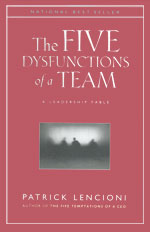
Notice how this spectrum progresses from mistakes that are blameworthy to those that could be considered praiseworthy. How many of the failures in your business are truly blameworthy? Compare this to how many are treated as blameworthy, and you'll have a better understanding of why so many failures go unreported. You cannot learn from your mistakes when the emphasis is on blaming. You cannot learn to become more resilient when your energy is tied up in assigning or avoiding blame. Perhaps Procter & Gamble's Lafley said it best in his Harvard Business Review interview: "I think I learned more from my failures than from my successes in all my years as a CEO. I think of my failures as a gift. Unless you view them that way, you won't learn from failure, you won't get better--and the company won't get better." Upcoming Classes at ILCTExpand Your Business! Deepen Your Coaching Skills! Register For Upcoming Classes at ILCTNOTE: Flexible payment plans are available. For details call 800-961-3424 Book RecommendationsThe Five Dysfunctions of a Team by Patrick Lencioni
| ||||

 |
||||
|
||||